
ASTM B88 Copper Tube Size Chart: Standard Dimensions, O.D. & Wall Thickness for Type K, L, M
Technical Specification & Industry Standard Compliance
This Copper Tube Size Chart is meticulously compiled based on the ASTM B88 Standard Specification for seamless copper water tube. It provides authoritative data for Nominal Pipe Sizes (NPS), Actual Outside Diameters (O.D.), and varying wall thicknesses for Type K (Heavy Wall), Type L (Medium Wall), and Type M (Light Wall). Engineers and procurement professionals should use these dimensions as the primary reference for high-pressure fluid transport and HVAC system design.
| Nominal Size (Inches) | Actual O.D. (Inches) | Type K (Heavy Wall) | Type L (Medium Wall) | Type M (Light Wall) | |||
|---|---|---|---|---|---|---|---|
| Wall Thick. | Inside Dia. | Wall Thick. | Inside Dia. | Wall Thick. | Inside Dia. | ||
| 1/4" | 0.375 | 0.035 | 0.305 | 0.030 | 0.315 | - | - |
| 3/8" | 0.500 | 0.049 | 0.402 | 0.035 | 0.430 | 0.025 | 0.450 |
| 1/2" | 0.625 | 0.049 | 0.527 | 0.040 | 0.545 | 0.028 | 0.569 |
| 5/8" | 0.750 | 0.049 | 0.652 | 0.042 | 0.666 | - | - |
| 3/4" | 0.875 | 0.065 | 0.745 | 0.045 | 0.785 | 0.032 | 0.811 |
| 1" | 1.125 | 0.065 | 0.995 | 0.050 | 1.025 | 0.035 | 1.055 |
| 1-1/4" | 1.375 | 0.072 | 1.231 | 0.055 | 1.265 | 0.042 | 1.291 |
| 1-1/2" | 1.625 | 0.083 | 1.459 | 0.060 | 1.505 | 0.049 | 1.527 |
| 2" | 2.125 | 0.109 | 1.907 | 0.070 | 1.985 | 0.058 | 2.009 |
| 2-1/2" | 2.625 | 0.122 | 2.381 | 0.080 | 2.465 | 0.065 | 2.495 |
| 3" | 3.125 | 0.134 | 2.857 | 0.090 | 2.945 | 0.072 | 2.981 |
| 3-1/2" | 3.625 | 0.148 | 3.329 | 0.100 | 3.425 | 0.083 | 3.459 |
| 4" | 4.125 | 0.163 | 3.799 | 0.110 | 3.905 | 0.095 | 3.935 |
| 5" | 5.125 | 0.192 | 4.741 | 0.125 | 4.875 | 0.109 | 4.907 |
| 6" | 6.125 | 0.221 | 5.683 | 0.140 | 5.845 | 0.122 | 5.881 |
Introduction:
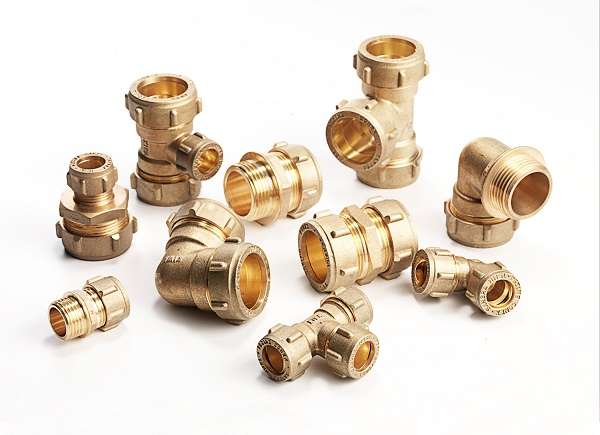
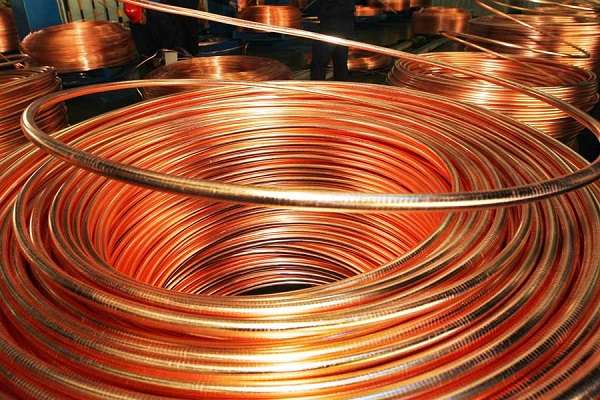
Copper pipes are frequently found in homes and office buildings to carry various fluids. The connections between these pipes are achieved using copper fittings.
Various-sized and shaped fittings are available to properly join pipes. The chart allows people to select the correct fitting for their copper pipes.
Here we’ll cover the basics of copper fittings, how their sizes are chosen, and how to make a proper selection. The information is given in a way that allows everyone to easily understand it.
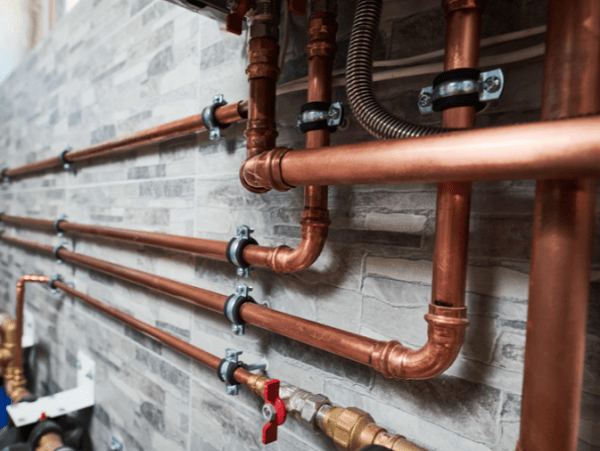
1. What is the copper pipe size chart?
With the help of a copper pipe size chart or copper fittings size chart, you will be able to determine the copper pipe size required for building, plumbing, heating, ventilation, and air conditioning operations.
You must indicate the nominal pipe size, the outer diameter (OD), the surface thickness of the pipe wall, and the type (for instance, K, L, M, and DWV).
Each type has a different wall thickness and use, with Type K being the strongest and thickest. Whether you are a professional or a DIY enthusiast, it is essential to use the copper pipe chart to accurately select the correct pipe for a project involving water, gas, or refrigeration.
The chart prevents the use of fittings that don’t fit with the pipe or fixtures being used. By using the copper pipe size chart or copper fittings size chart, material planning becomes easier, work accuracy improves, and it becomes simpler to follow plumbing regulations.
Regardless of whether you are repairing or replacing copper pipes or working on a new system, the copper pipe chart makes things easier and more reliable.
Here is a basic copper fittings size chart:
2. What materials are used for copper pipe?
While high-purity copper is the main ingredient in copper pipes, the presence of some other materials can depend on the purpose and type of pipe. Here's a breakdown of the key materials:
High-Purity Copper (≥99.9%)
- C12200, also known as Electrolytic Tough Pitch (ETP) Copper, is the key material used.
- Due to its good conductivity, anti-corrosion, and formability, copper is perfect for use in plumbing, HVAC, and industrial applications.
Phosphorus (P)
- About 0.015–0.040% of phosphorus is put into the mixture to help deoxidise the copper and increase its strength against corrosion.
- This usually occurs in Type K, L, and M copper pipes that are used for plumbing water and gas systems.
Minor Alloying Elements (Optional)
- Many specialised copper pipes are made with tiny amounts of silver, tin, or arsenic to improve their function, but this is not common in regular plumbing.
With the addition of phosphorus, refined copper in copper pipes becomes durable, does not rust, and is useful for various purposes.
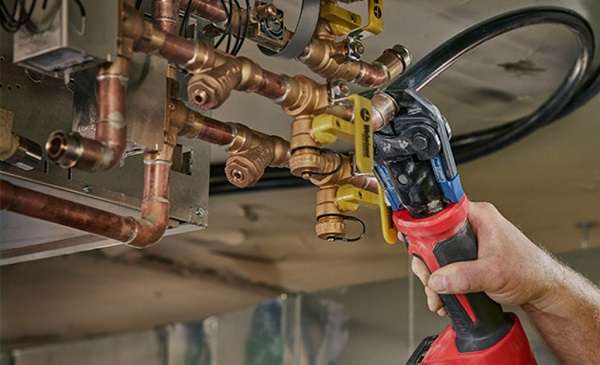
3. What is the application of Copper Pipe?
Everywhere, be it homes, businesses, or industries, copper pipes are very popular because they are strong and resilient, do not corrode easily, and are excellent conductors of heat.
Being able to work under extreme temperatures and pressures means they are valuable for many key systems.
· Plumbing Systems
Copper pipes are found in both types of water supply systems inside homes, buildings, and commercial buildings.
You can typically find Type L or Type M copper pipes being used for these applications. They do not rust, help keep the water clean, and last a long time with very little maintenance.
· HVAC and Refrigeration
Copper’s high thermal conductivity of heat makes it perfect for heating, ventilation, and air conditioning (HVAC) systems. It is commonly found in the refrigerant lines and coils of air conditioning and refrigeration systems.
Heat moves through copper pipes more easily, making the furnace more energy efficient and increasing its output.
· Gas Distribution
For home and business usage, thicker type K copper pipe is used to convey natural gas and propane. It provides a safe, sealing system that follows many building code rules in the community.
· Medical Gas Systems
Gases such as oxygen, nitrous oxide, and others are piped around hospitals and healthcare facilities with copper pipes. They don’t interact with gases and help to maintain the cleanliness and safety of the gases for patients.
· Solar and Hydronic Heating
Copper pipes can be found in solar water heating and radiant floor heating because they conduct and hold heat efficiently.
· Fire Sprinkler Systems
Due to its strength and resistance to corrosion, copper piping is a good choice for dry and pre-action sprinkler systems in areas where steel doors corrode easily.
Copper pipes play a key role in many systems by guaranteeing reliability, efficiency, and a higher degree of safety.
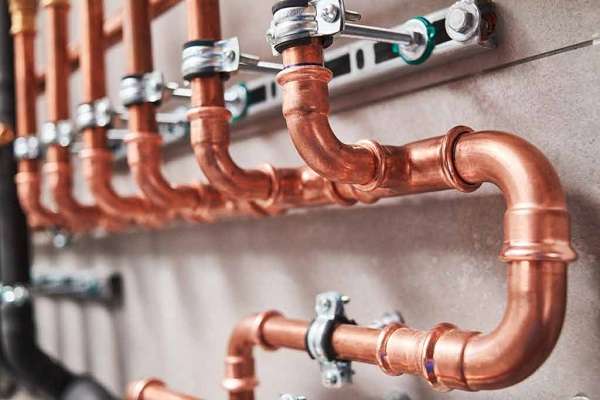
4. How to choose the right copper pipe?
Due to the difference in copper pipe chart sizes, selecting the right copper pipe ensures that your plumbing or HVAC system will be safe, efficient, and durable.
You need to select these based on what you want them for, the necessary pressures and temperatures, and whether you can use them within local building regulations. Here are the steps you need to follow to decide properly:
Identify the Application
The process starts with identifying how the copper pipe will be put to use:
- Plumbing (Water Supply):
Most people choose Type L copper pipe for both homes and businesses since it is reasonably durable and affordable. It can be installed underground or above ground. Since Type M is thinner and less costly, it may be used for the water system at a lower pressure.
- Gas Lines:
Type K copper pipe is usually chosen for the distribution of natural gas or propane. The heavy walls make it the best choice for applications that involve gas pipelines going underground or facing high pressure.
- HVAC and Refrigeration:
Use ACR copper tubing, made for use in refrigerant systems, that is chosen by diameter instead of wall thickness.
- Medical Gas Systems:
For this reason, the United States only uses Type K or L copper pipes that have been thoroughly cleaned and approved.
Understand Copper Pipe Types
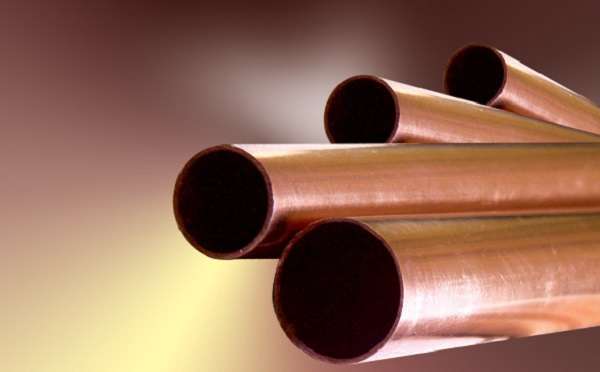
- Type K:
Thickest possible; correct for underground water and gas lines or high-pressure pipes, and meets Canadian standards.
- Type L:
The average thickness used in pipes, for use with pipes in the house or above-ground.
- Type M:
Suitable for water systems that do not require high water pressure inside.
- DWV (Drain, Waste, and Vent):
Pipes are used only for draining and venting, since pressure-resistant lines have to be used elsewhere.
Check Local Building Codes
You should always ensure your plumbing and construction codes are met before making a purchase. Certain areas have rules that say what pipe type and size can be used based on the situation to ensure safety.
Determine Pipe Size
Choose a copper pipe size that has the appropriate nominal area and OD to meet the needs of your system. Getting the right size helps the water flow and pressure stay constant.
Consider Budget and Lifespan
Type M pipes can be bought for less, though they are not as sturdy as Schedule 40 and could wear out with high levels of stress or pressure. Type L and Type K pipes are sturdier and suitable for services in stressful sites, lasting longer.
Combining your application needs, durability concerns, rules set by local code, and the costs plays a role in choosing the right copper pipe. When you are unsure, talk to a plumbing expert to make sure your plumbing system is safe, works well, and will last.
Conclusion
Selecting the correct ASTM B88 copper tube size and type is critical for balancing flow efficiency with long-term system integrity. By distinguishing the specific wall thicknesses of Type K, L, M, and DWV, you can optimize your plumbing, HVAC, or industrial gas systems for peak pressure resistance and durability.
Before sourcing, always cross-reference your application with local building codes and the precise dimensions provided in our standard size chart to ensure safety compliance and maximum service life.
Copper Tube Size & Application FAQ
What is the main difference between Copper Type K, L, and M?
The primary difference is the wall thickness. While all three share the same Actual Outside Diameter (O.D.) for a specific nominal size, Type K has the thickest wall, Type L is intermediate, and Type M is the thinnest. This affects the pressure rating and durability of the tubing.
Which copper pipe should be used for underground water service?
Type K is the industry standard for underground water service. Its heavy-duty wall thickness provides superior resistance to corrosion and physical deformation caused by soil movement or external pressure.
Are Type K, L, and M fittings interchangeable?
Yes. Because the Outside Diameter (O.D.) is constant across all three types for a given size, you can use the same standard copper fittings (solder, compression, or press-fit) regardless of the wall thickness type.
What does ASTM B88 compliance mean for copper tubing?
ASTM B88 is the gold standard for seamless copper water tube. Compliance ensures the material is at least 99.9% pure copper and meets rigorous tolerances for tensile strength and dimensional accuracy required for plumbing and HVAC systems.
Can Type M copper pipe be used for HVAC applications?
Type M is generally limited to low-pressure residential heating and domestic water lines. For HVAC and refrigeration (ACR), where high pressures are common, engineers typically specify Type L or Type K to ensure safety and system longevity.