
Gear Chamfering Process Guide: Pre vs. Post Heat Treatment Analysis (2026)
Why "Timing" Decides Your Tool Life & Final Burr Cleanliness.
|
⏱️ Read Time: 6 Min
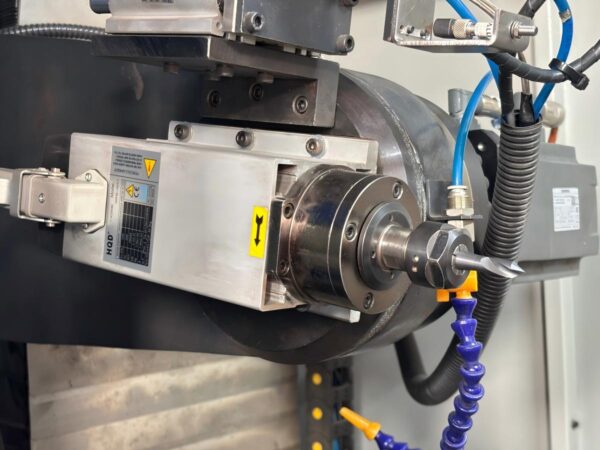
In my 15 years of consulting for gear factories, one question comes up in almost every layout meeting: "Tony, should we put the chamfering machine before or after the heat treatment furnace?"
It sounds like a simple layout question, but it fundamentally determines your Tool Cost (OPEX) and your Final Cleanliness. If you get this sequence wrong, you are either burning through expensive CBN inserts on hardened steel, or you are letting burrs survive the entire line to ruin your NVH score.
1. The "Golden Rule": Pre-Heat Treatment (Soft Machining)
For 90% of automotive gears (including EV transmission gears), the industry standard—and Armpre's Recommendation—is to perform chamfering after Hobbing and before Heat Treatment.
Why is this the mainstream choice?
- Material Hardness: Before heat treatment, the gear steel (e.g., 20CrMnTi) is typically around HRC 20-30. This allows us to use standard carbide inserts instead of expensive PCBN tools.
- The "Shot Peening" Bonus: The physics logic is simple:
- The chamfering machine leaves a tiny < 0.1mm residual burr.
- The gear goes into the furnace. The burr becomes brittle.
- During Shot Peening, the high-velocity steel shots physically peel off the brittle burr.
💡 Tony's Insight
"Don't aim for 'Absolute Zero' burrs at the chamfering station if you have Shot Peening downstream. A controlled 0.1mm residue is perfectly acceptable and cost-effective because the process chain will clean it up."
2. Case Analysis: The Impact on Tool Life
We compared the tool life of the same Armpre Chamfering Machine running on Soft vs. Hard gears.
| Metric | Pre-Heat Treatment (Soft) | Post-Heat Treatment (Hard) |
|---|---|---|
| Hardness | HRC 20 - 30 | HRC 58 - 62 |
| Tool Material | Standard Carbide | CBN / Ceramic |
| Tool Life | 2,000 - 5,000 parts | 300 - 800 parts |
| Cost Per Part | $0.02 | $0.15+ |
[Data Source: Armpre Internal Lab Tests]
Process Engineering FAQ
Q1: Will chamfering before heat treatment cause deformation?
Tony Says: No. Chamfering removes minimal material. A uniform chamfer actually helps distribute stress better than a sharp corner during quenching.
Q2: My shot peening isn't removing the burrs. Why?
Tony Says: This usually means your initial burr was too large (> 0.15mm) or "rolled over". You need to adjust your chamfering machine to ensure the residual burr is thin enough to become brittle.
Q2: Do we need coolant (Wet) or can we run Dry?
Tony Says: For "Soft Machining" (Pre-Heat Treatment), we strongly recommend Dry Machining with strong air blasting. Coolant often causes thermal shock to carbide inserts, reducing their life. Air is sufficient to clear chips and keep the tool cool.
Q4: What is the standard chamfer size we should aim for?
Tony Says: A generic rule of thumb is 0.1m to 0.15m (where m = module). For example, for a Module 4 gear, a 0.5mm chamfer is ideal. Too small (<0.2mm) won't protect the tooth tip; too large (>0.8mm) wastes cycle time.
Strategic Positioning
Don't treat the Gear Chamfering Machine as an isolated island. It is part of an ecosystem.