
Automatic vs. Manual Pipe Grinding: When Should Your Factory Eliminate Hand Tools?
A deep dive into the hidden costs of manual angle grinders, quality inconsistencies, and the undeniable ROI of machine chamfering.
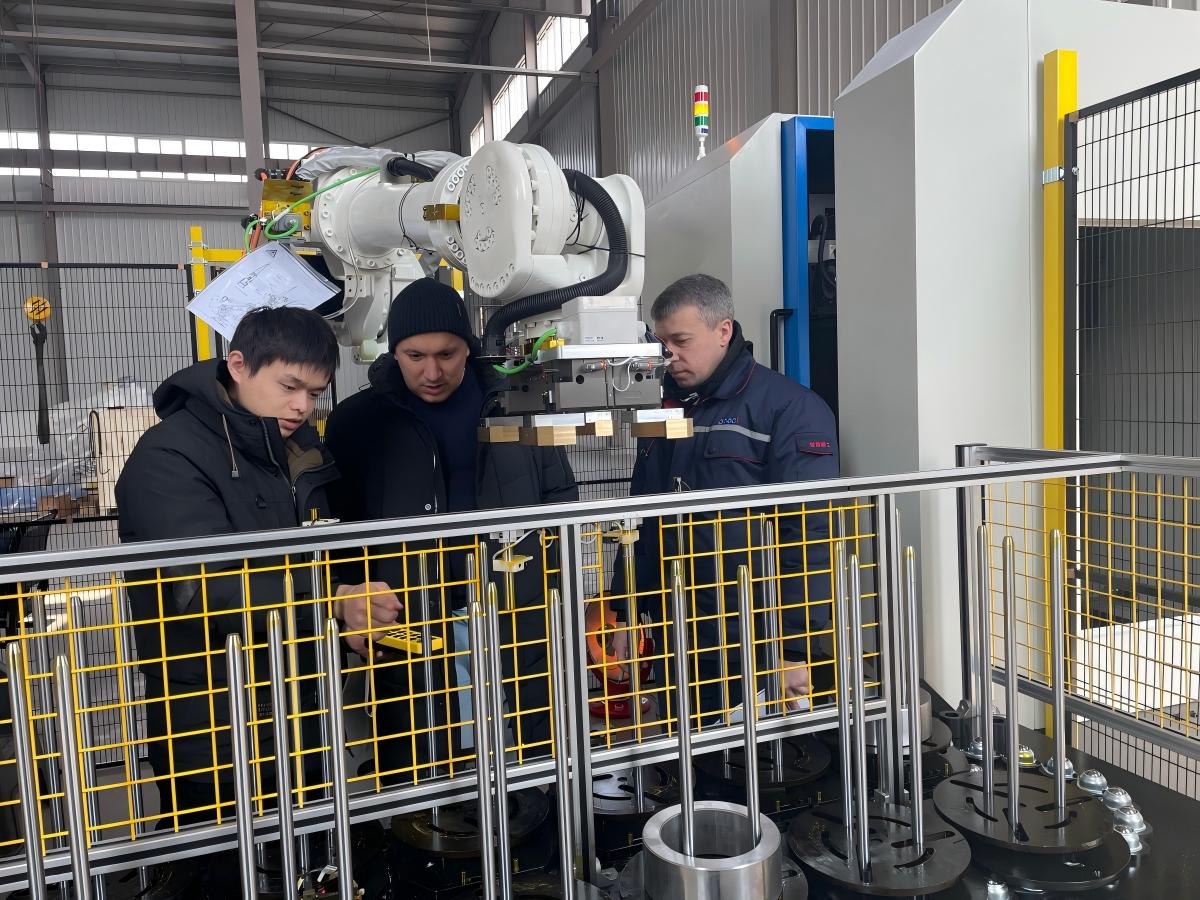
1. The Myth of “Cheap” Manual Labor
Walk into many fabrication shops today, and you will still hear the screeching sound of angle grinders. For decades, the manual angle grinder has been the go-to tool for preparing pipe ends for welding. The logic seems sound at first glance: an angle grinder costs $100, while a semi-automatic chamfering machine costs thousands. Why upgrade?
This is the “Cheap Labor Myth.” In 2026, relying on manual labor for repetitive, high-volume precision tasks is the fastest way to erode your profit margins. The true cost of manual grinding is not just the hourly wage of the operator; it is buried in abrasive consumable costs, slow throughput, and—most critically—rework due to poor weld quality.
2. The Hidden Costs of Hand Grinding
Let’s break down the actual expenses incurred when a worker manually bevels a 2-inch Schedule 40 steel pipe.
- Cycle Time: A skilled worker might take 2 to 3 minutes to grind a decent 37.5° bevel on a single pipe end. An automatic machine does this in 3 to 5 seconds.
- Abrasive Consumables: Grinding discs wear out quickly. A busy shop can easily spend $500 to $1,000 a month just on replacement discs. A set of carbide inserts on a machine, however, can process up to 3,000 pipe ends before needing to be rotated.
- Fatigue and Inconsistency: At 8:00 AM, the worker might produce a perfect 37.5° bevel. By 3:00 PM, fatigued by vibrations and noise, that angle might drift to 45° or 30°, leaving an uneven root face (land).
💡 Tony’s Quality Insight
“When a welder encounters an uneven manual bevel, they have to adjust their travel speed and heat input constantly. This leads to burn-through on thin spots or lack-of-penetration on thick spots. You aren’t saving money on grinding; you are just passing the cost down to the welding department.”
3. Safety & Ergonomics: The Unspoken Liability
Hand-Arm Vibration Syndrome (HAVS) is a recognized industrial disease caused by prolonged use of vibrating hand tools like grinders. Furthermore, sparks, metal dust inhalation, and the risk of shattering abrasive discs present massive safety liabilities. Transitioning to a closed-loop pipe chamfering machine eliminates these hazards. The operator simply loads the tube and presses a pedal—the machine takes the physical toll, not the human.
4. ROI Calculation: The Tipping Point
When does it make financial sense to switch? The industry standard tipping point is roughly 200 pipe ends per day. If your factory processes more than this, a machine will pay for itself rapidly.
Consider a Semi-Automatic Pipe Chamfering Machine. While the initial CapEx might be $15,000, the machine replaces the output of 3 manual grinders. It reduces consumable costs by 80% and practically eliminates weld rejections caused by poor joint preparation. In most HMLV (High-Mix Low-Volume) job shops, the ROI break-even point is achieved in less than 6 months.
Process Optimization FAQ
Absolutely. Machines use carbide inserts that slice the metal, leaving a milled, mirror-like finish (Ra 3.2 or better) with no heat-affected zone (HAZ), whereas grinders smear and burn the metal.
Yes. Changing the clamping jaws and cutter head takes about 5 minutes. Even for a batch of 20, the speed of cutting (3 secs per part) makes it faster and far more accurate than manual work.
Standard inserts have 3 to 4 cutting edges. Depending on the material (carbon vs. stainless), one edge can process 500-1000 ends. You simply rotate the insert when it gets dull.
Yes. The extreme heat generated by abrasive grinding can cause chromium carbide precipitation, reducing the corrosion resistance of stainless steel at the weld joint.
Heavy-duty hydraulic machines can easily bevel wall thicknesses up to 25mm (1 inch) in a single pass, something that would take a worker over 30 minutes to do by hand.
Stop Grinding Away Your Profits
Let us calculate your exact ROI. Send us your production volume.