
Small Parts Deburring Machine: The Complete Buying Guide in 2025
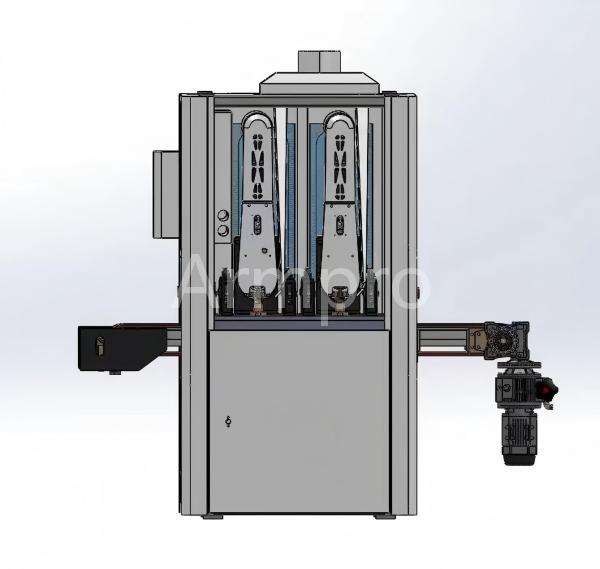
Introduction
In precision manufacturing, a small parts deburring machine is necessary for eliminating sharp edges, burrs, and flaws from metal, plastic, or other materials.
Focusing on elements like productivity, cost, and adaptability to fit the requirements of current production settings in 2025, this buying guide offers important insights on choosing the appropriate deburring equipment for small components.
1. What are the Types of Small Parts Deburring machines?
Small parts deburring machines are vital for completing precise components. By eliminating sharp edges, burrs, and surface flaws, they guarantee component quality and safety compliance. Several kinds of small parts deburring machines are available depending on the material, part size, and manufacturing requirements:
· Vibratory Deburring Machines
These machines softly grind away burrs using vibrating abrasive medium. They are perfect for batch-processing many minor components, yielding consistent outcomes.
· Centrifugal Barrel Finishing Machines
Ideal for complex and fragile small components, centrifugal barrel machines provide significant force using high-speed spinning, hence attaining quicker and more precise deburring than vibratory methods.
· Tumbling (Rotary Barrel) Machines
Effective and traditional, tumbling machines polish and deburr at once by slowly rotating components with abrasive material inside a barrel. They perform well for bulk processing of hard metals.
· Magnetic Pin Finishers
Made for extremely small and delicate components, magnetic pin finishers employ fine stainless steel pins and magnetic energy to deburr tiny, hard-to-reach regions without compromising complex features.
· Brush Deburring Machines
These machines mechanically remove burrs using revolving brushes. They are most appropriate for components needing precise surface treatment and little material removal.
· Ultrasonic Deburring Machines
Especially beneficial in sectors like electronics and medical equipment, these machines clean and deburr delicate or ultra-precise microscopic components by use of ultrasonic waves in a liquid medium.
- Manual Deburring Tools
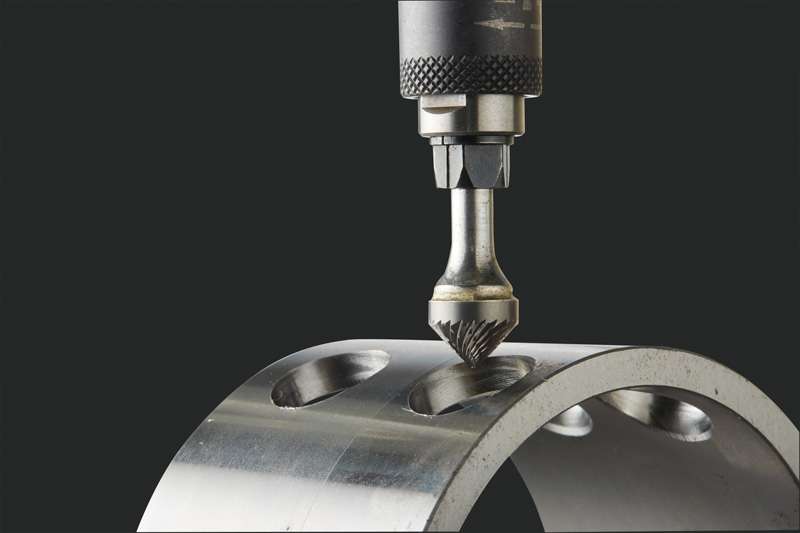
Handheld instruments such as scrapers, rotary files, or abrasive pads permit manual deburring with the most control over delicate components for small quantities or highly tailored parts.
2. What is a Small Parts Deburring Machine?
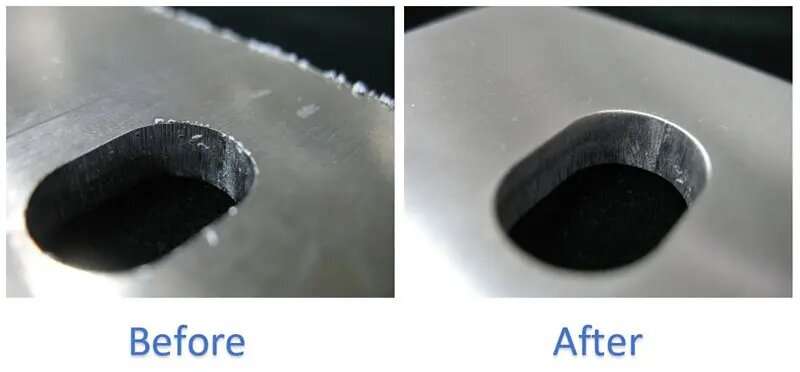
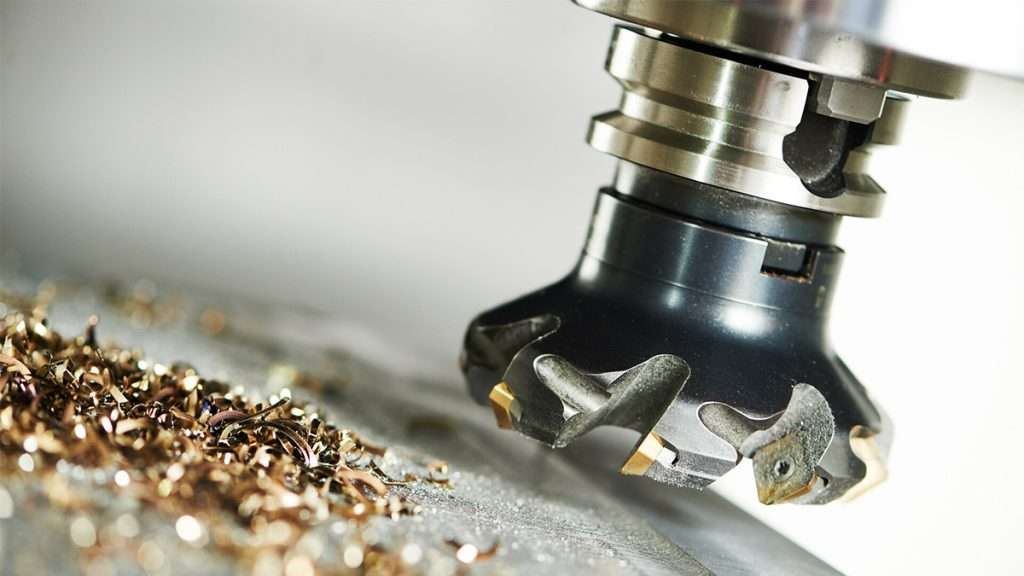
A small parts deburring machine is a specialized tool used to remove burrs, sharp edges, and surface flaws from small components after manufacture. Left over from operations such cutting, drilling, milling, or casting, burrs are little, undesirable material remnants.
Left in place, they could compromise the performance, assembly, and general look of the component. Small parts deburring machines are meant to handle delicate, detailed, sometimes complex components without harming them.
To obtain smooth, clean surfaces, they employ several methods including vibration, centrifugal force, magnetic energy, brushing, or ultrasonic waves.
In sectors like aerospace, automotive, electronics, and medical device manufacture that need great accuracy and consistency, these machines are absolutely vital. A small parts deburring machine serves multiple functions by improving both appearance standards and functional aspects and safety standards, and durability standards of finished parts.
The right positioning of small parts to assemble and improve safety and operational lifetime with a professional finish forms its basic benefits.
With built-in constant quality control and reduced labor costs, the small parts deburring machine system provides quicker manufacturing speeds; hence, it is a vital investment tool for contemporary manufacturing departments.
3. What are the Applications of the Small Parts Deburring Machine?
Most industrial purposes call for deburring machines for small parts as they need accuracy, together with safety features, and the creation of superior surfaces.
Its edge smoothing and polishing of fine components capacity and its capacity to remove burrs with great efficiency make it essential tool in many uses:
· Electronics Industry
Micro-component deburring and connectors and circuit board deburring use tiny components deburring machines to preserve component integrity and provide clean edges for strong connections.
· Automotive Industry
By means of deburring machines, consumers can add engine elements such as tiny machine components, hence maximizing use levels and improving product matching precision as well as extending their life.
· Aerospace Industry
Manufacturing of structural components, turbine blades, and aircraft parts calls for perfect surface finishes that are safe and performance-related; deburring is therefore necessary.
· Medical Device Manufacturing
Every surgical tool, medical implant, and precision instrument calls for burr-free surfaces since such finishing work guarantees patient safety as well as equipment performance.
This regulated sector needs precise finishes, which deburring machines effectively produce.
· Watchmaking and Jewelry
Aesthetics and accuracy are everything in the jewelry and timepiece sectors. Tiny complex components have to be carefully polished without harming delicate details.
A small parts deburring machine offers the mild yet powerful finishing required to produce attractive, high-quality items with perfect surfaces.
· General Metalworking & Fabrication
Small parts deburring machines finish brackets, fittings, fasteners, and ornamental components, whether in custom fabrication shops or large-scale manufacturing. Deburring increases part quality, lowers the danger of handling-related injuries, and improves the general look of metal components.
4. What are the materials Small Parts Deburring Machine Compatibility?
Designed to handle a broad spectrum of materials employed in many sectors, a small parts deburring machine, these machines are meant to remove burrs, smooth edges, and polish surfaces without compromising the integrity of fragile or complex components whether handling soft polymers or hard metals.
Achieving the best outcomes and preserving the quality of finished products depend on knowledge of material compatibility.
· Metals
Among the most often used materials worked on using a tiny parts deburring machine are metals. These devices can manage:
- Aluminum:Needs mild deburring to avoid scratches and keep a clean, polished surface.
- Steel and Stainless Steel:Requires more abrasive to maintain close tolerances and remove obstinate burrs.
- Copper and brass:Softer metals need careful handling to preserve surface luster and avoid deformation.
- Titanium:Titanium components used in the aerospace and medical sectors call for exact deburring to prevent surface damage and preserve component strength.
· Plastics
Often found in electronics and automotive applications, plastic parts are softer and more easily damaged. Without distorting or scratching the plastic components, small parts deburring machines use gentle or non-abrasive media to eliminate flashing and smooth edges.
· Ceramics
Advanced technical ceramics—like those found in medical devices and electronics—demand very careful treatment. Very fine material-equipped small parts deburring machines can deburr ceramic components while reducing the possibility of chipping, breaking, or weakening.
· Composites
Increasingly prevalent in the aerospace, automotive, and sporting goods sectors are composite materials include fiberglass and carbon fiber-reinforced polymers (CFRP).
Deburring composite parts calls for a controlled technique to prevent fraying fibers or harm of the layered structure; small parts deburring machines can efficiently supply this.
A small parts deburring machine's adaptability is its most important tool across sectors since it can safely and effectively finish materials ranging from metals to plastics, ceramics, and composites.
Appropriate choice of deburring technique and media guarantees part preservation of function, accuracy, and aesthetic appeal.
5. What are the advantages of a Small Parts Deburring Machine?
For producers in all sectors, a small parts deburring machine is a necessary purchase since it provides several benefits. These machines offer notable advantages affecting the whole manufacturing process, from enhancing product quality to increasing production effectiveness.
· Improved Product Quality
The primary benefit of operating with small parts deburring machines is in steady enhancements of product quality standards. With its burr-free finishing capabilities, the machine produces components that assemble more seamlessly, thus reducing component wear, and performance enhancement becomes possible.
· Higher Efficiency and Productivity
The automation of deburring allows production lines to function at much higher speeds. These small parts deburring machines allow several components to be treated simultaneously, hence reducing production time compared to human deburring methods.
· Cost-Effective Operation
Because of its initial purchase prices, a small parts deburring machine offers consumers automated finishing processes that assist in lowering long-term labor expenses. A small parts deburring machine lowers operator costs from wasted materials, in addition to repair charges and product rejections.
· Consistency and Precision
Working with complicated components or tiny-sized objects causes handheld deburring processes to produce uneven finishing quality. To guarantee the manufacture of good components, small parts deburring machines generate consistent outcomes for every operation.
· Better Aesthetic Appearance
The operation of a deburred part enables better product performance, combined with enhanced professional looks.
A smooth and polished surface appearance enhances product visual appeal because it matters in sectors that require excellent finishing quality, such as consumer electronics and luxury goods industries.
6. How does a Small Parts Deburring Machine operate?
The mechanical process of small parts deburring machines removes surface imperfections together with burrs and sharp edges from small components.
A variety of mechanical steps perform the deburring function according to different machine designs to achieve final smoothness among the operating steps, which include:
· Loading the Parts
The machine accepts small parts that require deburring as its first step. The machine design options allow parts to find placement either freely inside a chamber or secured to specific holders or arranged in batch systems of fixtures or baskets.
· Choosing the Right Deburring Media
The performance of the machine depends greatly on the deburring media. The part material, the kind of burrs, and the preferred surface quality all influence the selection of media—ceramic, plastic, stainless steel, organic chemicals, or even dry polishing tools.
- For severe deburring on tougher metals, ceramic media is perfect.
- Softer metals and sensitive plastics employ plastic media.
- When both deburring and burnishing (surface shining) are needed, steel media is often employed.
Selecting the appropriate size, shape, and material of media helps to enhance efficiency and safeguard the components from undesired surface damage.
· Starting the Deburring Action
The machine starts the deburring cycle after the components and media are loaded. Various kinds of small parts deburring machines employ particular mechanisms:
- Vibratory deburring:A vibratory motor generates fast side-to-side movement, hence gently yet powerfully rubbing the media and components against one another.
- Rotary Tumbling:The machine spins a barrel where components tumble over one another and the media, progressively softening rough edges.
- Centrifugal Deburring:Powerful centrifugal force is produced by high-speed rotation, which firmly presses components and media together for quicker, more aggressive burr removal.
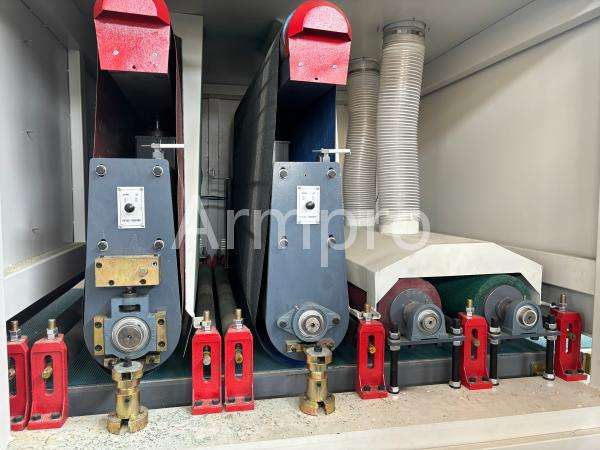
- Brushing systems:Some machines brush away burrs from tiny, detailed surfaces using rotary brushes or belts with abrasive tips.
- Abrasive Flow Machining:Abrasive-laden fluids move through intricate components, including internal cavities, eliminating burrs in hard-to-reach places.
The part's geometry, material, and the needed surface polish determine each method's choice.
· Monitoring and Deburring Cycle
Operation time on small parts deburring machines, which spans between three hours and several hours, is determined by user needs. The advanced small parts deburring machine enables operators to modify parameters such as vibration strength levels and speed standards and operating durations, and grit speed for optimal outcomes.
The evaluation of production status occurs through observation windows and sample collecting sites, enabling workers to monitor quality without material interruption.
· Separation of Media and Parts
The deburring cycle of the machine will cease when finished components are extracted from the abrasion medium.
Both components and media can be accelerated through magnetic separators using vibrating separators in modern processing equipment, which incorporates automatic screening methods.
A well-designed separation system from Sequel data allows the media to stay attached to finished components while avoiding product contamination.
· Cleaning and Final Inspection
A combination of pressure water systems with air pressure systems together with ultrasonic washing solutions cleans components until they reach full purity.
Quality inspectors check dimensional specifications as well as surface finish qualities from the beginning of manufacturing until packaging operations start.
7. How to Evaluate Small Parts Deburring Machine Precision and Stability?
The ability to maintain high-quality output depends on precise and stable performance of a small parts deburring machine and designing a strategic selection practice is crucial. The key components receive evaluation through several important criteria.
· Burr Removal Consistency
The machines should maintain a level surface condition of all components while cleaning away burrs. Batch uniformity during results requires a steady shape coupled with smooth, sharp edges of components.
· Stability of the Machine
Stability determines precision. Look for:
- Low vibration levels:Guarantees accuracy and reduces wear.
- Stiff frame construction:The machine runs steadily and at the same time stops any distortion.
- Consistency across time:Without drift between various times of operation, the machine should steadily keep its performance accuracy.
· Media Interaction Precision
Provide an evaluation of how machine parts interact with media. Because it requires little wear coupled with constant action for effective burr removal, the kind of media should fit material and burr type.
· Process Control Accuracy
Programmable settings and feedback systems in machines enable precise control, hence enhancing accuracy. Look for simple calibration and responsive changes to keep consistent functioning.
· Quality of Finish and Dimensional Accuracy
Check deburred components for uniform surface polish and dimensional accuracy. A precise machine should maintain part dimensions within defined limits and attain the necessary smoothness.
· Ease of Operation
Machines with simple controls and precise adjustment systems enable operators to keep steady outcomes across various components and materials, thereby guaranteeing smooth functioning.
· Performance Under Varying Conditions
Run the machine under various burr conditions, materials, and part sizes. Without sacrificing accuracy, a steady machine should work well in many situations.
A consistent and accurate small parts deburring machine guarantees high-quality, burr-free parts in any production environment, employing consistent operation over time, uniform results, and preservation of component dimensions.
8. What is Small Parts Deburring Machine Deburring Speed and Efficiency?
Key elements in maximizing production time, cost savings, and guaranteeing high-quality outcomes are the deburring speed and efficiency of a small parts deburring machine. Here is a summary of what affects deburring speed and efficacy:
· Deburring Speed:
Deburring speed is the pace at which the machine eliminates burrs from components. This is shaped by:
- Machine Type:While centrifugal or rotary machines can remove burrs more quickly owing increased speed and power, vibratory deburring machines tend to work slower but are more gentle.
- Media Type:The speed at which burrs are removed is influenced by the medium used—ceramic, plastic, or steel. Though it may be more severe on sensitive components, harder media usually offers quicker deburring.
- Cycle Time:The time required to process every batch of components. While quicker machines can handle more components in less time, this may occasionally compromise the end quality.
· Deburring Efficiency:
Deburring efficiency is the degree to which the machine eliminates burrs while reducing resource use, wear, and energy consumption. Important considerations are:
- Energy Consumption:Machines that run effectively utilize less energy yet produce the required deburring outcomes. Reduced energy use helps to more sustainable operation and cost savings.
- Media Usage:Efficient machines use media effectively, hence maximizing the number of components that can be processed before the media has to be replaced or reconditioned.
- Automation and Control:The capabilities of machines to adjust their speeds automatically and send feedback help them deal with different parts and burr dimensions without needing human intervention.
· Impact of Precision on Speed and Efficiency
For deburring processes, the degree of accuracy is just as important as the overall speed attainment. Operating machines at high speeds aggressively to remove burrs harms sensitive areas that call for extra maintenance costs.
Optimal combined performance of fast operation with accurate deburring techniques lets producers get better final products by total resource use, therefore reducing manufacturing time.
· Material Type and Part Geometry
Choosing materials and creating component sizes defines the diversity in efficiency and speed.
The speed at which the deburring material works depends on material hardness, together with the degree of geometric complexity, which occasionally needs slow speeds or designated deburr media for effective yet intact results.
9. What is the technical specification of the Small Parts Deburring Machine?
Depending on model choice, machine type, and intended use, a small parts deburring machine offers various technical parameters.
These main technical criteria call for assessment of a small parts deburring machine:
· Deburring Method:
Different techniques exist for machine burr removal from parts.
- Vibratory Deburring:This machine uses vibration to mix parts with abrasive media which produces a gentle burr removal process.
- Centrifugal Deburring:The machine applies centrifugal force to accelerate components toward abrasive media so the process becomes more efficient.
- Rotary Deburring:Devices spin parts with aggressive materials that both clean them up and eliminate burrs.
- Brush Deburring:This method employs rotating brushes specifically for getting rid of burrs from precise and complex-shaped parts.
· Machine Size and Weight:
A machine occupies space according to its dimensions (1.5m x 1m x 1.2m) and weighs between hundreds of kilograms and numerous tons due to construction materials and size variations.
· Processing Capacity:
- Batch Size:A single processing cycle of the machine allows the handling of up to 500 parts.
- Part Size:The device accepts items ranging from 100mm x 100mm parts and can work with even more diminutive parts measuring less than a few millimeters.
· Motor Power and Speed:
Equipment speed and capacity proportions are directly related to the motor power range between 1.5 kW to 2 HP. The machine can operate at adjustments between 500 to 3000 RPM for customizable material and burr processing.
· Deburring Media:
The deburring process requires abrasive media, which includes sizes from 3mm to 10mm of ceramic, plastic, steel shot, or nylon particles. The equipment features a quick media interchange system used to modify the deburring solution for various tasks.
· Control System:
- Manual vs. Automated:Basic models have manual operation; yet more sophisticated machines implement automated systems that enable programmable setups.
- PLC & Touchscreen:Plenty of industrial machines are equipped with PLC control systems and touchscreen interfaces that make them simple to operate.
· Environmental Considerations:
- Noise Levels:The sound output of machines spans between 50dB to 85dB with emphasis on workplace protection and work environment comfort.
- Vibration Control:Different high-quality models feature built-in vibration-damping systems that help machines operate with stability.
· Material Compatibility:
The equipment operates efficiently with multiple material types, including stainless steel along with aluminum, and aluminum along with plastic and composites. The machine equipment supports the processing of all shapes, including cylindrical, flat, and irregular parts.
· Safety Features:
The machines contain safety covers as well as emergency stop buttons and dust extraction solutions to safeguard personnel and preserve environmental cleanliness.
· Cycle Time:
Machine types, together with part complexity levels, determine how long it takes to complete each cycle, which spans from several minutes to thirty minutes.
· Maintenance:
The machine design provides simple maintenance access to all parts, while it requires infrequent oil application.
· Cost and Warranty:
These small parts deburring machines become available at prices spanning from several thousand dollars to many thousands of dollars while carrying standard warranties extending from one to three years.
The specifications of a small parts deburring machine, including deburring method, along with size and motor power and control system capacity and material tolerance, and safety elements, determine its operational effectiveness for particular applications.
10. What are the top 10 Small Parts Deburring Machine manufacturers?
These leading small parts deburring machine manufacturers include these top companies for their excellent deburring solutions with innovation and quality production capabilities:
1. Rösler Oberflächentechnik GmbH
Country: Germany
Overview: Rösler operates as a worldwide surface treatment technology authority, where they deliver vibratory finishing as well as centrifugal finishing with deburring solutions for small parts.
The company develops standard and custom machines that fulfill industrial-specific needs.
2. Walther Trowal
Country: Germany
Overview: Walther Trowal provides customers with multiple surface finishing machines that feature vibratory finishing technology and centrifugal finishing technology, together with shot blasting systems.
The company delivers accurate electronic solutions for cleaning small parts with total reliability.
3. SMTCL
Country: China
Overview: SMTCL operates as China's leading manufacturer of machine tools and develops multiple styles of deburring equipment for small parts. The company provides dependable and economical technical solutions for multiple industries.
4. Timesavers International
Country: Netherlands
Overview: Timesavers operates as a top manufacturer that produces automated surface finishing machines that include small parts deburring solutions.
Users recognize Timesavers machines as excellent tools that deliver precise deburring results for metals and other industries.
5. OTEC Präzisionsfinish GmbH
Country: Germany
Overview: The company OTEC maintains its reputation through sophisticated machinery, which provides high-precision finishing of metal materials.
The company focuses on developing systems for small components that employ deburring methods involving mass finishing and centrifugal deburring.
6. Trowal
Country: Germany
Overview: Trowal operates as part of the Rosler Group by delivering state-of-the-art technology for deburring alongside cleaning and surface treatment operations.
The deburring devices manufactured by this company have established superior status in the automotive, aerospace and electronic manufacturing sectors.
7. Deburring Machine Company (DMC)
Country: USA
Overview: DMC provides various automated and manual finishing machines for precision deburring of small parts through their specialized production lines.
8. Acro-Spec
Country: USA
Overview: Acro-Spec builds small parts deburring machines that meet the requirements of delicate parts that need precise finishing. The company provides manual and automated systems that serve multiple industries, such as medical devices and aerospace.
9. Hagener Maschinenbau
Country: Germany
Overview: Hagener Maschinenbau focuses on automated surface finishing and deburring technology to create specific small part deburring machines that serve high-precision applications throughout the automotive and electronics sectors.
10. Kramer & Grebe GmbH
Country: Germany
Overview: The innovative deburring machine manufacturer Kramer & Grebe develops effective and adaptable solutions that perform deburring operations on small components for multiple materials in various industries.
In the small part manufacturing sector, these companies stand out because they represent the pinnacle of deburring technology expertise, which delivers precise surface quality alongside accurate dimensions and optimized factory production levels.
11. What should we consider before purchasing a Small Parts Deburring Machine?
· Deburring Method
Select a deburring strategy between vibratory, centrifugal, brush or rotary based on your material type and object dimensions together with end quality needs.
· Material and Part Compatibility
Check if the machine system works with your regular materials, which mix between metals and plastics alongside complex and basic component designs.
· Production Capacity and Speed
The machine should operate at a speed and batch quantity matching your current production volume for maximum efficiency and quality control.
· Precision and Consistency
The selection of machines should include units that maintain precise deburring results, both for delicate and high-precision components.
· Ease of Operation and Maintenance
Machines featuring easy-to-use controls through PLC systems and touchscreens should be selected because they reduce maintenance time and prevent equipment breakdowns.
· Machine Size and Power Requirements
Your facility must confirm that the machine works in the designed space while operating on both the power and voltage standards.
· Cost, Warranty, and After-Sales Support
Users should select a machine that offers good warranty protection, together with reliable technical support, while accounting for the entire equipment ownership costs.
12. What are the possible troubleshoots of the Small Parts Deburring Machine?
· Uneven Deburring Results
Cause:
The use of damaged media combined with incorrect settings on machines causes poor results during operation.
Solution:
Implement a new set of media while adjusting both speed adjustments and time durations, and load settings.
· Excessive Noise or Vibration
Cause:
The deburring machine produces unbalanced load vibrations when machine parts are loose, along with wear from aging bearings.
Solution:
Fixing loose equipment components right away, while balancing uneven loads and changing components that become worn out with new replacements, should be the next course of action.
· Motor Overheating
Cause:
Overloaded machine, poor ventilation, or motor issues.
Solution:
The system needs proper ventilation while inspecting the motor for possible damage and limiting the workload size.
· Media Blockage or Jam
Cause:
The machine suffers from both the wrong media size and blocked media due to accumulated debris.
Solution:
The machine requires regular cleaning, while users should select an appropriate media size.
· Machine Not Starting
Cause:
Electrical malfunctions can occur along with an interrupted power supply, and sometimes the emergency stop becomes active.
Solution:
Start with inspecting the power source, followed by emergency stop reset, then examine the wiring system.
· Poor Surface Finish
Cause:
The problem can arise from badly suited media combined with brief processing durations.
Solution:
Proper abrasive media plus additional cycle duration should be arranged for the processing.
· Control Panel Malfunction
Cause:
Problems arise from software malfunctions together with loose connections, and broken machine components.
Solution:
System restart and wiring inspection must be followed by a call to technical service in case of need.
13. What are the Frequently Asked Questions (FAQ) on Small Parts Deburring Machine?
1. What is a Small Parts Deburring Machine?
The Small Parts Deburring Machine represents specialized industrial equipment which eliminates unwanted burrs and sharp edges as well as removes surface imperfections from resources that measure small in size post-manufacturing activities including cutting and machining operations or stamping operations.
2. What types of deburring methods are used for small parts?
Vibratory deburring serves together with centrifugal deburring and brush deburring, and rotary deburring, based on part dimensions as well as material type and surface requirements.
3. Which materials can be processed using a Small Parts Deburring Machine?
Repairs to metals (aluminum, steel, brass), plastics, ceramics and composites can be performed by the machine as long as suitable abrasive media is selected.
4. How do I choose the right Small Parts Deburring Machine?
A proper Small Parts Deburring Machine should be chosen by evaluating the part characteristics including raw materials and production volume requirements, alongside finish specifications and available workspace dimensions and speed capabilities and financial constraints.
5. Can delicate or complex-shaped parts be deburred safely?
Delicate parts with intricate shapes become damaged through machines when operators use correct settings and select suitable media.
6. How often should the machine be maintained?
The machine requires regular basic maintenance which involves media replacement alongside cleaning operations and motor inspections as well as bearing checks to maintain peak performance.
Conclusion
Choosing a small parts deburring machine for 2025 calls for an understanding of material qualities in addition to finish criteria and manufacturing needs.
Since these sorts fit various use cases, your greatest pick for a deburring machine will be from vibratory and centrifugal choices or rotary or brush designs.
Choosing a Small Parts Deburring Machine in 2025 calls for an evaluation of machine sizes coupled with processing speed requirements and motor as well as control device power levels alongside maintenance practice criteria.
System lifetime relies on both reliable manufacturers and basic troubleshooting skills. The suggested buying process lets you get tools improving product quality criteria as well as business growth potential and output.
Related Products
CONTACT US
Tell us your raw material and working details to get quotations within 24 hours.
WhatsApp Us: +86 159 27 555863