
Seamless Robot Integration for HMLV: Myth vs. Reality
Who said robots are only for mass production? How to build a "Flexible Automation Cell" that adapts as fast as you do.
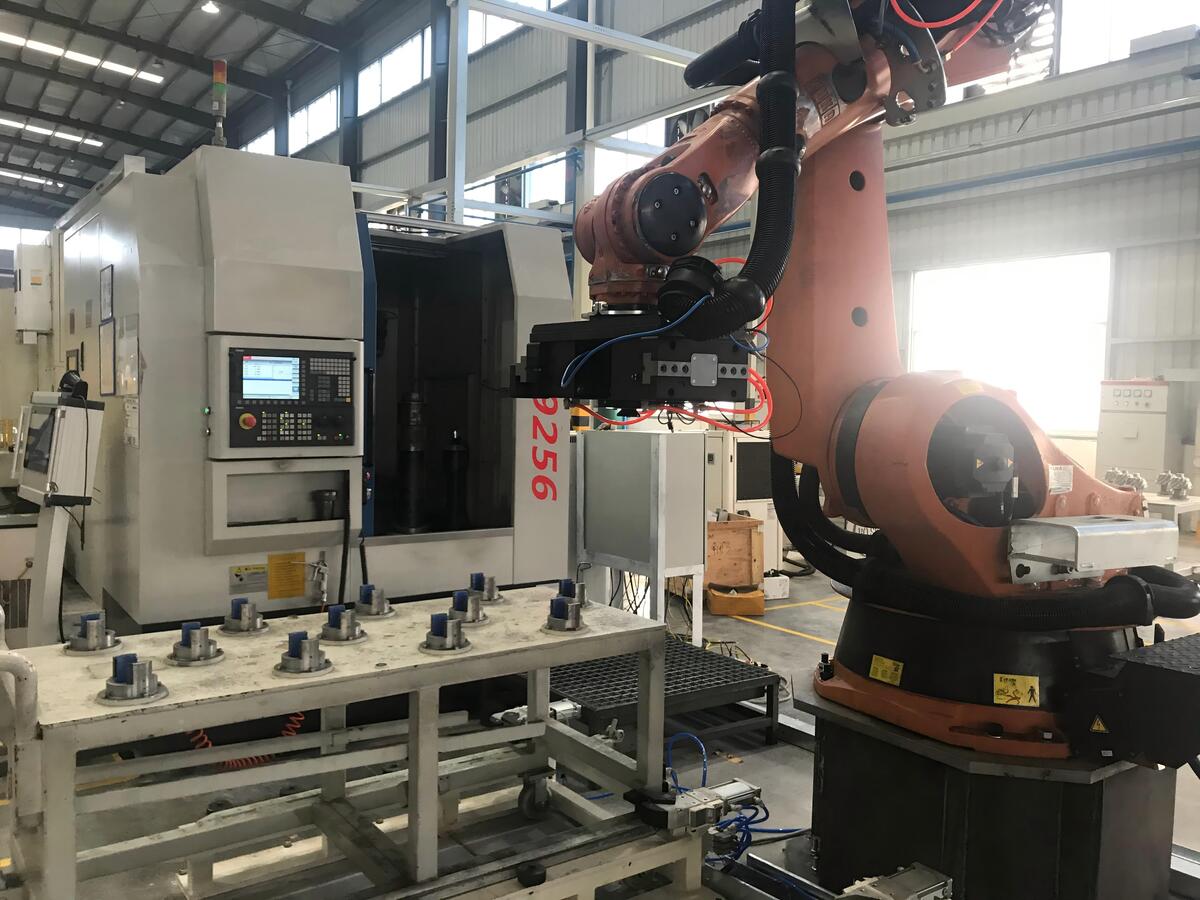
There is a common myth in the gear industry: "Automation is only for orders of 100,000+ parts per year. My shop does batches of 500. Robots are useless for me." Five years ago, this was true. But in 2026, the game has changed.
Labor shortages are global. You cannot find operators willing to stand in front of a machine for 8 hours loading gears. Even for High-Mix Low-Volume (HMLV) shops, the question is no longer if you should automate, but how to automate without losing flexibility. This guide explores how Armpre integrates with FANUC/KUKA robots to create a cell that can switch products almost as fast as a human operator.
1. The "Handshake": Profinet & Standardized I/O
The biggest headache in automation integration is communication. "The robot is moving, but the door won't open." Armpre machines are "Automation Native." We don't bolt on automation as an afterthought.
- Profinet / EthernetIP: We provide a single cable connection for all logic signals. No messy wiring of 50 individual relays.
- Pre-Written Logic: The machine's PLC already contains the "Handshake" logic: Request to Enter, Safe to Enter, Clamp Open/Close Confirmation, and Cycle Complete.
This "Plug and Play" approach reduces the integration time from weeks to days.
2. The Gripper Challenge: Handling the "High Mix"
If you make 20 different gears, do you need 20 different robot grippers? No. That would be a logistical nightmare. For HMLV automation, we recommend and integrate 3-Jaw Centric Grippers with Quick-Change Fingers.
The strategy is simple: The base is a robust Schunk or SMC gripper body. The fingers are custom-machined aluminum. By grouping your parts into "families" (e.g., Set A for Module 2-4, Set B for Module 5-8), you can cover 80% of your production with just 2 or 3 sets. The "Click-Lock" mechanism allows a robot operator to swap fingers in 60 seconds without tools.
3. The "Black Light Factory" for HMLV
Imagine this scenario: It’s 5:00 PM. Your shift ends. You have a batch of 300 gears left. In a manual shop, the machine stops. In an Armpre Automated Cell, the operator loads the In-Feed Conveyor. The robot runs from 5:00 PM to 9:00 PM, unattended, in the dark.
Capturing these 4 hours of "Free Production" every evening increases your daily output by 50%. This is how HMLV shops achieve the ROI of mass production facilities.
4. ROI Calculation: The Hidden Math
Let's look at the numbers for a typical Job Shop.
- Manual Operator Cost: $25/hr + Benefits = ~$60,000/year.
- Robot Cell Cost: ~$80,000 (One-time investment).
- Utilization: Manual is ~85% (due to breaks, fatigue); Robot is 98% (non-stop).
The Breakeven Point is usually 14-18 months. But the real value isn't just saving wages. It's Predictability. A robot doesn't call in sick. For your downstream customers, this reliability is worth paying a premium for.
💡 Tony's Insight
"Automation is no longer about replacing people; it's about augmenting your skilled people so they can focus on setup and programming rather than lifting heavy steel blanks."
Automation & Integration FAQ
Q1: Can we run the machine manually if the robot is down?
Tony Says: Yes. This is a mandatory safety feature. We install a "Mode Select" switch (Auto/Manual). In Manual mode, the auto-door logic is disabled, and an operator can use the foot pedal to load parts safely.
Q2: What happens if the robot drops a part?
Tony Says: The robot gripper has "Part Presence" sensors. If it misses a pick or drops a part, the system detects the error, pauses, and sends an alert (via light tower or email) to the supervisor. It won't crash the machine.
Q3: Does Armpre supply the robot, or do we buy it?
Tony Says: We are flexible. We can supply a "Turnkey Cell" (Machine + Fanuc Robot + Fencing). Or, if you have a preferred integrator locally, we provide the machine with the "Automation Ready Kit" (Auto Door + I/O Interface) for them to connect to.
Q4: How much space does the automation cell take?
Tony Says: Less than you think. Modern collaborative robots (Cobots) or compact industrial robots can be mounted on top of the machine or directly to the side, adding only about 1 meter to the footprint.
Q5: Can the robot handle both Shafts and Ring gears?
Tony Says: Yes, but you need a "Dual Gripper" setup or a Tool Changer on the robot arm. We usually program the robot to pick shafts by the OD and Ring gears by the ID or OD depending on the geometry.
Automate or Stagnate
The era of manual loading is ending. Plan your layout today.