
Manual G-Code vs. Conversational Programming: Which is Better for Small-Batch Gear Chamfering?
Why the "Skills Gap" is killing your efficiency, and how "Zero-Code" systems empower your shift leaders.
|
⏱️ Read Time: 12 Min
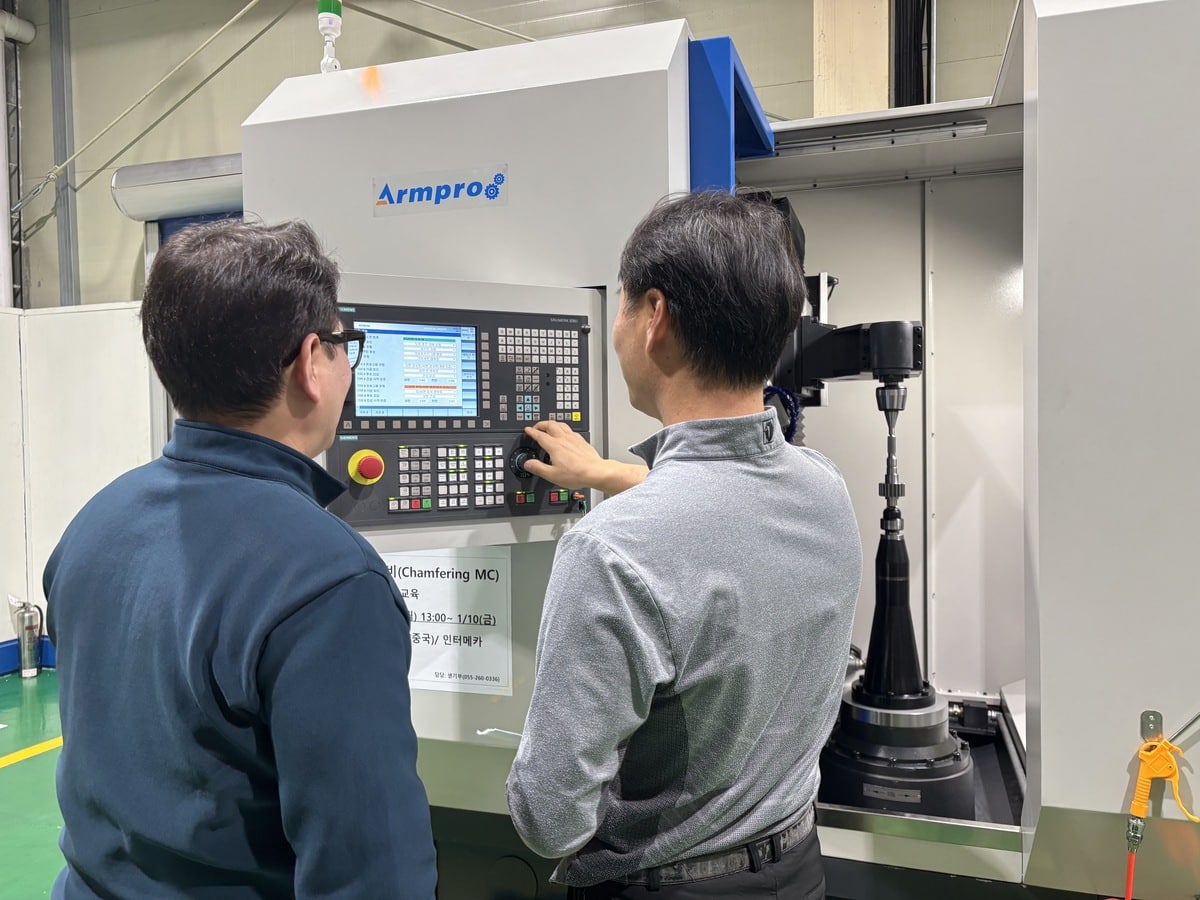
In my 15 years of visiting gear factories—from Detroit to Busan—I have seen the same scene play out a hundred times. A high-end CNC chamfering machine sits idle. The red light is flashing. Is it broken? No. The floor manager tells me: "We are waiting for Mr. Lee. He is the only one who knows how to modify the G-code macro."
In the HMLV (High-Mix Low-Volume) reality, relying on a "G-Code Wizard" is a bottleneck. This guide compares the traditional Manual G-Code approach against the modern Conversational Programming approach.
1. The Anatomy of Manual G-Code
G-code offers ultimate flexibility but demands ultimate skill. To chamfer a gear, a programmer must calculate the vector path based on the helix angle. One missing decimal point or one wrong `M` code can crash the spindle.
💡 Tony's Insight
"I often see factories buying expensive 5-axis machines but running them like 3-axis mills because the operators are too scared to edit the G-code. This is a waste of capital."
2. Head-to-Head: The 30-Minute Test
| Metric | Manual G-Code | Armpre Conversational |
|---|---|---|
| Programming Time | 45 Minutes | 2 Minutes |
| Skill Required | Senior Engineer | Shift Leader |
| Risk | High (Crash Risk) | Zero (Logic Guard) |
Software FAQ
Q1: Can we still access the G-code for custom tweaks?
Tony Says: Yes. While the conversational interface handles 95% of tasks, advanced users can open the "Backstage" to edit the raw G-code for specialized needs.
Q2: Does it handle variable chamfer sizes?
Tony Says: Absolutely. Critical for helical gears. You can set different parameters for the acute (sharp) and obtuse (dull) edges to prevent excessive material removal.
Q3: How do we back up the programs?
Tony Says: The machine has USB and Ethernet ports. We recommend saving verified "Recipes" to your factory network drive.
Q4: Is the interface available in multiple languages?
Tony Says: Yes. We support English, Spanish, Korean, Chinese, and German, allowing instant switching for multinational teams.
Q5: What if an operator enters an impossible value?
Tony Says: The system has "Logic Guard." If an input exceeds machine travel limits or creates a collision path, the HMI blocks the cycle start.
Stop Coding, Start Machining
In 2026, typing code is for software engineers, not machinists.