
Sandpaper Grit Chart: The Ultimate Guide to Grit Sizes & Material Selection
Comprehensive Grit Comparison for Metal, Wood, and Industrial Finishing.
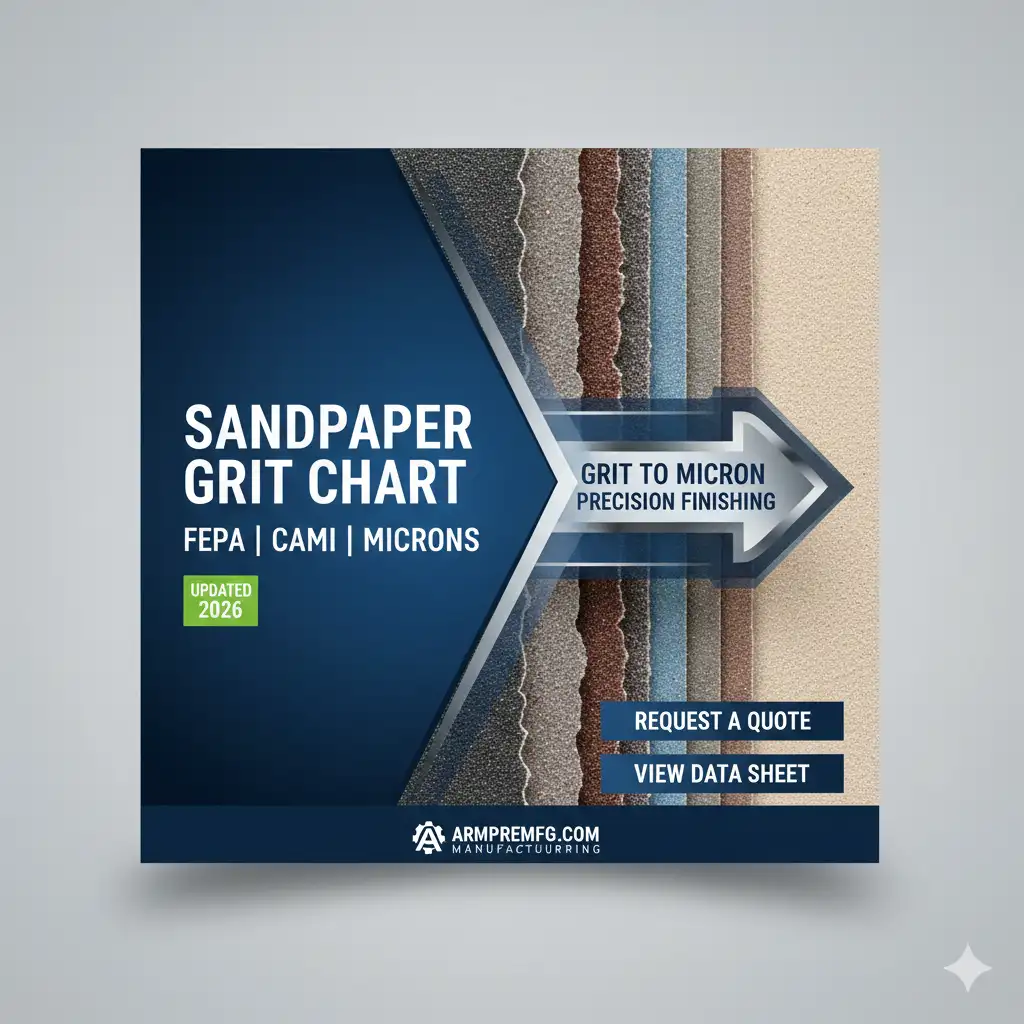
(Quick Navigation)
-
Grit Comparison Chart (Jump to full data table)
-
Micron Conversion (Detailed size analysis)
-
Application Guide (Selection by material)
-
Technical FAQ (Industry-specific answers)
Introduction
Sandpaper is a widely known tool that is used in almost all sectors and several construction projects, as it is dominated by sanding, shaping, and finishing. In carpentry work, it is used to polish wooden surfaces, and as a preliminary stage in any of the metalworking processes to smooth large surfaces and sharpen edges; it is also used on products that are to be painted, stained, or polished.
Every sheet of sandpaper or roll is designated by its grit, which speaks of the degree of coarseness or fineness of the surface with abrasive material applied to it.
Through this article, one will understand all the types of sandpaper grits ,including polishing grit sandpaper, as well as acquire a sandpaper Grit Chart to select the right Grit for the work. To explain the engineering culture of woodworking, paper, and metal polishing, the knowledge levels of grit are quite important to consider for acquiring the right finish.
It is especially important for those who start their work using the sandpaper, as well as for experienced specialists already working in this field, as the correct choice of grit will positively impact the result of the work to be done.
*Note: Micron values are approximate averages to guide industrial selection.*
Industrial Application & Grit Selection Guide
⚙️ Metal Fabrication
Best Abrasive: Aluminum Oxide (General Purpose) or Ceramic (Heavy-duty).
Pro Logic: For Stainless Steel deburring, initiate with P60 grit. Ceramic belts are recommended for high-pressure grinding to prevent heat discoloration.
🚗 Automotive Refinishing
Best Technique: Wet Sanding.
Pro Logic: To eliminate clear coat scratches or orange peel, P1000+ grit is mandatory. Finer grits (up to P2500) ensure a swirl-free surface before high-gloss buffing.
🪵 Precision Woodworking
Key Strategy: The "1.5X Progression Rule".
Pro Logic: Never skip more than one grit level (e.g., 80 → 120 → 180). Over-skipping prevents the next grit from removing the previous scratches, compromising the final stain finish.
Sourcing Insight for Engineers: When procurement teams evaluate abrasive suppliers, the Grit Tolerance (P-Grade vs. CAMI) is critical for consistency. Armpre's industrial abrasives strictly adhere to FEPA standards to ensure predictable surface Ra values in automated finishing lines.
1. Understanding Sandpaper Grit
What is Sandpaper Grit? What is Polishing Grit Sandpaper?
Sandpaper grit is the number of cutting points visible from the surface. These particles help finely grind or plane material or process things. Grit numbers indicate particle size, with lower numbers being coarser and higher numbers being finer. Grain size controls how rough or mild sanding is and the final surface polish.
Importance of Sandpaper Grit
Impact of Grit Size on Surface Finish:
- Coarse grits(e.g. 40-60) are used where the material is to be removed quickly, such as paint or steel with an uneven outer layer.
- Fine grits (e.g. 220-400) are applied to get a smooth surface that is ideal for polishing and more detailing work.
Impact on Material Removal Rate:
- The coarser forms also cut rapidly, thus perfect for tasks that require the removal of more material.
- A fine gritremoves less of the material, which makes it useful in certain tasks where one needs more control in the operation as well as in the finishing stages.
Importance of Selecting the Right Grit:
- It is also possible to select the wrong gritwhich upon use results in achieving the right finish albeit damaging the material.
- Appropriate selection of gritmakes the work on sanding much easier, and faster and produces better results than when a wrong grit is used.
2. Sandpaper Grit Chart
Overview of Grit Categories
Sandpaper grits are grouped according to the particle size, where small particles act in removing a lot of material as compared to the large particles. There are four categories of grit level sandpaper, and each has its ideal use in sanding and finishing: coarse, medium, fine, and ultra-fine.
Coarse Grits (40-60)
Description: Coarse grits are developed for starting cutting and rough shaping based on the application of strong pressure.
Typical Uses: This involves scraping off previous coats, sanding rough surfaces of wood, and cutting edges for strength use.
Medium Grits (80-120)
Description: These medium grits are suitable for general sanding and for giving the surface a fine finish in preparation for the final polishing.
Typical Uses: Some of the benefits include: Straightening edges and contours, evening out surfaces, as well as declassing one’s work to ready the surface for painting or staining.
Fine Grits (150-220)
Description: The fine grits are employed when a perfect polish or a fantastic smooth surface is desired on the workpiece.
Typical Uses: Ideal for surface preparation before applying the last coat of lacquer, stain, or paint or for every inter-coat sanding.
Ultra-Fine Grits (240 and above)
Description: Ultra-fine grits are designed for polishing and achieving a high-gloss finish.
Typical Uses: Ideal for polishing metal, plastic, and wood, and achieving a smooth, mirror-like finish.
3. How to Use Sandpaper Effectively?
Proper Sanding Technique
- Always sand in the direction of the grain to avoid scratches or damage, especially when working with wood.
- Apply even, gentle pressure to ensure uniform material removal. Too much pressure can lead to uneven surfaces or premature sandpaper wear.
- Move the grit level sandpaper in smooth, controlled motions, avoiding circular patterns unless using a specific tool designed for it, such as an orbital sander.
Sanding Tools and Accessories
- Sanding Blocks: Help distribute pressure evenly and provide more control during hand sanding.
- Orbital Sanders: Ideal for larger surfaces, offering consistent sanding with minimal effort.
- Sanding Sponges: Great for sanding contours, corners, and irregular surfaces.
Using the right tool or accessory can enhance efficiency and produce better results.
Maintaining Sandpaper
- Cleaning: Use a grit level sandpaper cleaning block or an old brush to remove dust and debris from the sandpaper’s surface, prolonging its usability.
- Storage: Store sandpaper in a cool, dry place to prevent moisture from weakening the abrasive particles or causing paper backing to curl.
Maintaining your sandpaper ensures that it performs efficiently and lasts longer, saving time and money.
4. Common Mistakes to Avoid
Using the Wrong Grit
- Consequences: Using coarse-grit penetrates deep into the material, creating gouges and harming fragile surfaces, or a thin grit will not shave or remove material/blemishes.
- Tips: Sandpaper is classified by grit, so start with a coarse grit for rough work and a fine one for precise work. [IC] Use the sandpaper grit chart to determine the best grit for washing and scraping.
Applying Too Much Pressure
- Consequences: Being forceful can result in poor sanding, scratches on the surface, and fast exhaustion of the sandpaper.
- Tips: Use mild, even pressure to cut or wear down the wall using grit level sandpaper. This prevents regular sharpening of the cutting edge, giving the surface a glossy, easy finish and increasing the sandpaper's longevity.
Skipping Grits
- Consequences: Skipping grit may damage the surface or make it resistant to fine grits, resulting in a poor finish.
- Tips: Step up through grits beginning with a rough grit, followed by progressively finer grits. This allows perfect, professional results without creating impressions that are deep in the skin.
Need Bulk Industrial Abrasives?
Armpre provides high-precision sandpaper belts, discs, and sheets tailored to your
engineering tolerances and surface finish requirements.
* Custom sizes and OEM specifications available for global shipping.
What is the difference between P-grade and CAMI grit sizes?
P-grade (FEPA standard) is the European standard often marked with a 'P' before the number, offering more consistent particle size distribution. CAMI is the US standard. While they are similar at low grits, they diverge significantly above 220 grit, where P-grade becomes the preferred choice for precision finishing.
How do I convert sandpaper grit to microns?
Grit refers to the number of abrasive particles per inch, while microns measure the actual diameter of the particles. For example, a coarse 60 grit is approximately 269 microns, while an ultra-fine 1000 grit is roughly 18 microns. Using microns allows engineers to calculate precise surface roughness (Ra) values.
What sandpaper grit should I start with for metal rust removal?
For heavy rust or scaling on industrial metal parts, start with an extra-coarse grit between 24 and 36. If the rust is light or you are preparing the surface for priming, an 80-grit Aluminum Oxide abrasive is typically the best balance between speed and surface integrity.
Which abrasive material is best for stainless steel: Aluminum Oxide or Ceramic?
For stainless steel, Ceramic abrasives are superior due to their self-sharpening properties and cooler cutting temperatures, which prevent work hardening. While Aluminum Oxide is cost-effective for general use, Ceramic ensures a more consistent finish and longer belt life in high-pressure metal fabrication.
Why shouldn't I skip too many grit levels when sanding?
Following the '1.5X Rule' (e.g., 80 to 120 to 180) is critical. Skipping too many levels prevents the finer grit from removing the deep scratches left by the previous coarse grit. This results in hidden sanding marks that only become visible after the final staining or coating process.
Conclusion
Knowing the type of sandpaper grit is significant to optimizing the effectiveness when performing sanding and finishing. Selecting the right grade of abrasives for certain operations controls metal removal rates and surface finishes, and maintains the integrity of the workpiece.
If one were to choose the right grit and the right polishing grit sandpaper to start with and use the correct method of sanding, along with the right order to select the grits, then most mistakes could be eliminated, allowing for the production of professional finishes. All DIY and professional jobs require the optimal use of sandpaper grits to produce the best surfaces.